

Summary
- New virtual care technology enhances birthing safety in Weipa.
- Remote clinicians access real-time data via telehealth during emergencies.
New virtual care technology installed at Weipa Integrated Health Service will provide even greater clinical care and safety for new mums and their babies.
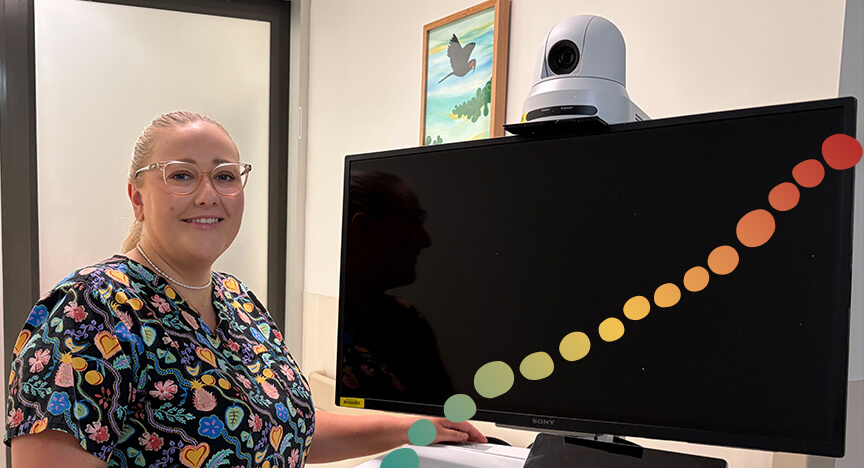
The Remote Patient Monitoring device will allow remote clinical experts to connect through telehealth directly into the birth suite if local staff require extra support in the rare event of an emergency during birthing.
The device will not only give the remote clinician two high-definition video streams through a secure telehealth link but also allow them to review foetal heart rate traces in real time and other essential patient data needed.
Torres and Cape Hospital and Health Service’s Weipa Acting Director of Nursing and Midwifery Brooke Morvinson said the new virtual care technology was an exciting step for virtual care in the region.
“Our maternity team are exceptionally skilled and have supported 76 women to birth closer to home in Weipa since birthing resumed in May 2024,” she said.
“But it is exciting they now have access to this additional support if it is required and it could even potentially reduce unnecessary travel to larger centres if the remote clinician is able to deliver that specialist service virtually.
“Due to the remoteness of our region, many in our communities already access virtual care services so they can receive that care without needing to travel so are already well aware of its benefits.
“Our Weipa staff have undergone specific training using the new technology, with the support of the Torres and Cape HHS Virtual Care Team, and we are proud to be able to offer this additional service to our women and their families.”
The device is easily fully mobile and can be deployed quickly to different rooms or areas of the hospital, and the cameras can be mounted on the Panda machine where newborn babies requiring additional care are treated.
Executive Director of Medical Services Dr Marlow Coates said the device would also be able to be used in less urgent settings, including for remote antenatal consultations with specialists or for staff training.
“There will always be some women with more complex cases who will need to travel to larger centres like Cairns to have those babies,” he said.
“But for those who can birth in Weipa we are committed to ensuring they have access to be best care possible.
“Technological advances are so important for rural and remote health services, and this is just another example of TCHHS’s focus on clinical and cultural safety.”