

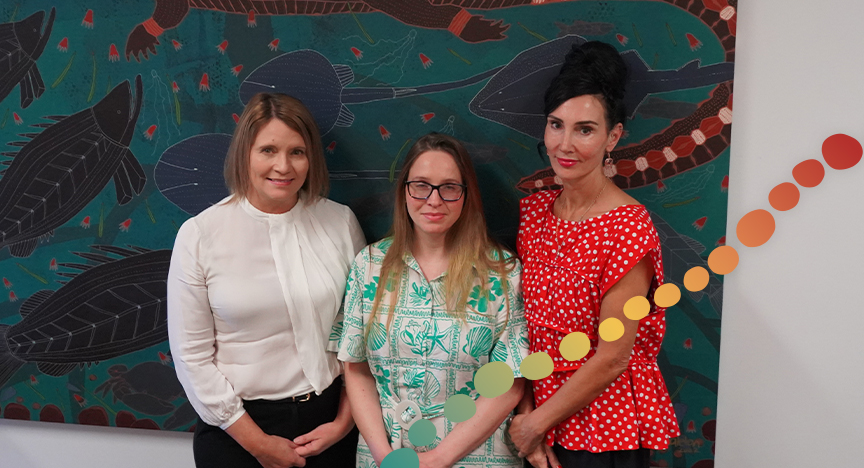
Torres and Cape Hospital and Health Service (TCHHS) will participate in a groundbreaking research project to Close the Gap.
TCHHS recently received approval to participate in the iSISTAQUIT project, an innovative, evidence-based national education initiative.
“iSISTAQUIT aims to assist practitioners in delivering culturally safe smoking and vaping cessation care to Aboriginal and Torres Strait Islander women during pregnancy,” project lead and Clinical Midwifery Consultant, Healthier Pregnancies Initiative, Debbie Bannan said.
“The program supports brief, meaningful point-of-care interventions that preserve the therapeutic relationship between clinician and client.”
The voluntary, evidence-based program will assist practitioners to develop the skills to converse with First Nations women who wish to quit smoking or vaping.
The research program is expected to be rolled out from late October and requires women’s informed consent to participate. iSISTAQUIT will support nicotine replacement therapy available through TCHHS primary health care centres after a successful pilot program championed by Dr Ineke Wever.
Nationally, 8.7 per cent of pregnant women smoke; however, this rate rises significantly to over 54 per cent among Aboriginal and Torres Strait Islander women.
TCHHS also reports higher-than-average rates, which hinders progress toward achieving the Closing the Gap birth weight targets by 2031.
“Tobacco consumption is a leading risk factor in our region,” Dr Wever said.
“It contributes to low birthweight babies, preterm birth, stillbirth and significant morbidity that lasts into childhood.”
To help Close the Gap, practitioners can access iSISTAQUIT online training modules, which are aimed to strengthen clinicians’ skills, confidence and optimism in delivering smoking and vaping cessation care.
The project is expected to roll out to TCHHS in late October.
“Smoking during pregnancy poses serious health risks to both mother and baby, with long-term impacts,” TCHHS Executive Director of Medical Services, Dr Marlow Coates said.
“It is linked to poorer perinatal outcomes such as low birth weight, small for gestational age, preterm birth, and perinatal death.
“iSISTAQUIT will support meaningful interventions that preserve the therapeutic relationship between clinician and patient.”